
Why is the AgWorks Corridor a competitive location for food processing and food manufacturing companies?
What makes the AgWorks Corridor an ideal place for food manufacturers?
How does the region's food manufacturing ecosystem support business growth?
Why do food manufacturers benefit from locating near agricultural producers and suppliers?
How does the AgWorks Corridor develop talent for food processing and manufacturing?
How do universities and technical colleges support food innovation and manufacturing?
How does applied research help food companies develop and commercialize new products?
What resources help food companies test, refine, and scale new products?
How does the AgWorks Corridor support food startups and commercialization?
Why is collaboration important in the food manufacturing industry?
How does the AgWorks Corridor help food manufacturers grow and compete in national and global markets?
Food Processing
The transformation of raw agricultural products into finished food products for consumers.
Ecosystem Overview
Food manufacturing is a cornerstone industry of the AgWorks Corridor, supported by an established manufacturing base and one of the nation’s most specialized food production workforces. The region supports a diverse mix of protein processing, ingredient manufacturing, packaged goods, and specialty food production, creating a mature ecosystem of manufacturers, suppliers, and industry partners. Combined with established processing infrastructure and strong transportation connectivity, companies gain the operational advantages needed to scale production, strengthen supply chains, and efficiently serve national and global markets.
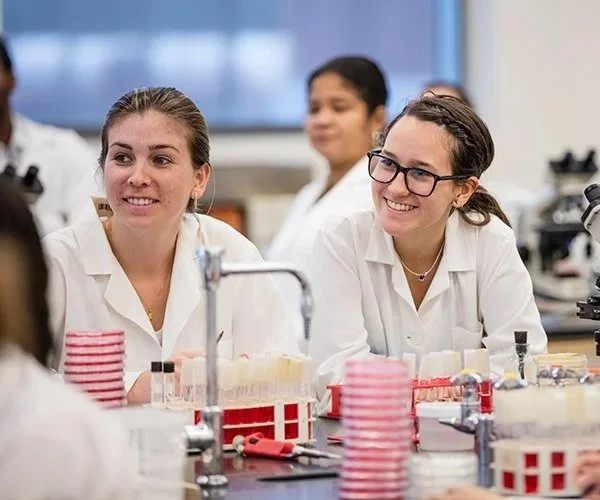
Photo Credits: Food Innovation Center
Workforce
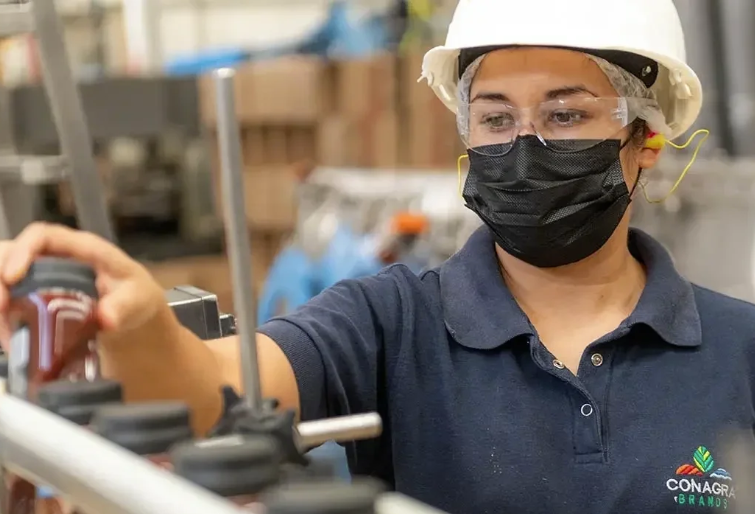
Food manufacturers benefit from a workforce ecosystem shaped by decades of production expertise and supported by a dense network of manufacturers, suppliers, and industry partners.
Photo Credits: Conagra Brands
14,000+ specialized workers in food manufacturing sector, creating significant workforce depth across processing, production, packaging, and manufacturing operations.
29,000+ workers in occupations relevant to food manufacturing, giving companies access to a broader labor pool beyond core production roles.
266% above the U.S. average employment concentration, the highest specialization level of any subsector in the corridor, creating one of the nation’s deepest per-capita food manufacturing labor pools.
16% workforce growth since 2019, reflecting continued production expansion, sustained investment, and increasing demand across the regional food manufacturing base.
64 employers, creating a dense ecosystem of manufacturers, suppliers, co-manufacturers, and workforce mobility that supports operational scale and long-term growth.
Key Employers
Over 200 companies in food manufacturing.



Talent Development
A connected talent ecosystem is helping strengthen the region’s food manufacturing workforce, with education and training programs aligned to the needs of modern food production environments, including automation, maintenance, food safety, quality systems, and manufacturing technologies. Through K-12 career pathways, technical training, and specialized university programs, companies gain access to talent developed for modern manufacturing environments and long-term workforce needs.
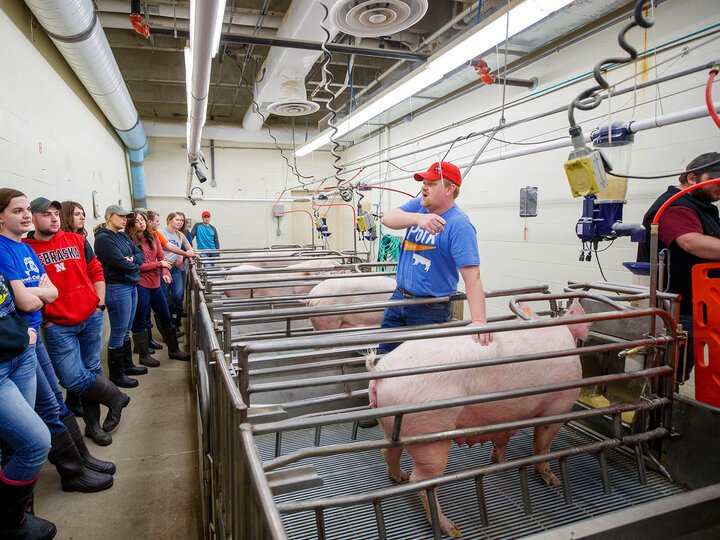
Photo Credits: Department of Animal Science
Early Talent Pipelines

Career academies aligned with evolving industry needs

K-12 pathways to food systems, agriculture, STEM and bioscience careers

Dual-credit programs earn high school and college credit

Developing technical and workplace skills before entering the workforce
Research Universities Driving Innovation
University of Nebraska - Lincoln | University of Nebraska - Omaha
Key Programs
Food Science and technology
Fermentation Science
Food Technology for Companion Animals
Biological Systems Engineering
Agricultural and Biological Engineering
Supply Chain Management
Biotechnology and Bioinformatics
Biology
Operations and Business Analytics


Workforce-ready Technical Talent
Metropolitan Community College | Southeast Community College | Iowa Western Community College
Key Programs
Industrial Maintenance and Technical Skills Training
Mechatronics
Automation and Robotics
Manufacturing Engineering Technology
Industrial Maintenance
Customized Industry Training
Career Academy Food, Agriculture, and Bioscience Pathways


Mark Faulkner
CEO of Vireo Resources

“This is a premium location for expansion… This current expansion sets the stage for two more planned expansions in the future that will continue to have more Nebraska products developed from Nebraska research done in partnership between Vireo and the University of Nebraska.”
Connected Industry Network
The AgWorks Corridor supports food manufacturers through an integrated ecosystem of research, pilot-scale production, testing, commercialization, and industry support resources that help companies move products from concept to commercial production faster and with less risk. From ingredient innovation and product formulation to pilot processing, validation, and scale-up, companies gain access to infrastructure designed to accelerate growth and reduce barriers to commercialization.
Applied Research & Commercialization Infrastructure
Meat Laboratory & Processing Facilities | University of Nebraska-Lincoln
A 19,500-square-foot USDA-inspected facility supporting protein processing, product development, validation, and workforce training. Multi-species harvesting, processing, packaging, and cold storage capabilities allow companies to test, refine, and scale products in a commercial production environment.
Food Innovation Center | Innovation Campus
Supports food and ingredient companies through pilot-scale processing, product development resources, applied research, and collaborative industry space. The facility helps companies move products from formulation through scale-up and market readiness.
Greenhouse Innovation Center | Innovation Campus
Provides more than 45,000 square feet of greenhouse and headhouse space supporting controlled environment research, crop trials, ingredient development, and commercialization activities. Flexible greenhouse services and leasable space support both startups and established companies.
Food Processing Center | University of Nebraska-Lincoln
A multidisciplinary resource providing technical support, consulting, education, product development, and business services for food manufacturers. Customized services help companies address challenges related to processing, food safety, product development, and commercialization.
Startup Support
Biotech Connector | Nebraska Innovation Campus
Provides more than 7,700 square feet of flexible wet-lab space, shared equipment, and research infrastructure supporting food, ingredient, and biotechnology innovation. Flexible leasing options allow companies to scale research, testing, and commercialization activities over time.
The Combine | Invest Nebraska
Supports startup growth through mentorship, customer discovery, commercialization programming, capital readiness, and industry connections—helping founders validate technologies, refine products, and accelerate market entry.
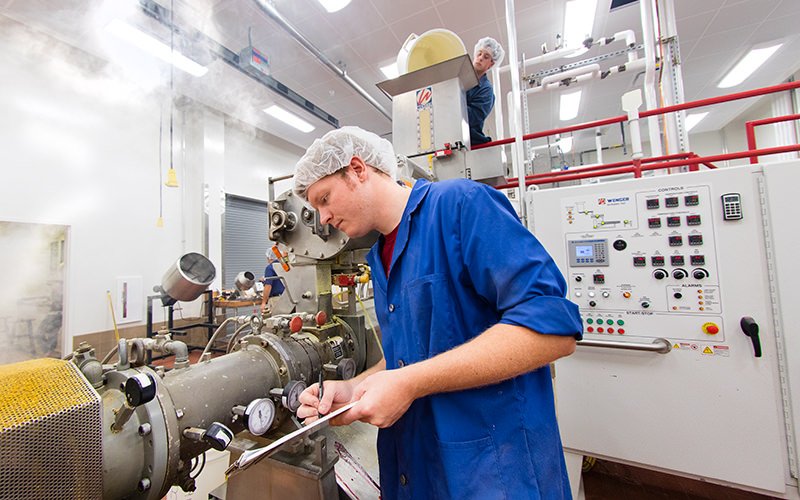
Photo Credits: Food Innovation Center